When the Alarm Goes Off at 2 A.M.: The Unfiltered Reality of On-Call Life in Wastewater Operations
The job posting reads clearly enough: wastewater treatment operator, competitive salary, benefits package, opportunities for advancement. What it rarely spells out — at least not in the language that would truly prepare a candidate — is what happens when the phone rings at 2:47 on a Tuesday morning in January, when a lift station in a residential neighborhood has alarmed, a float switch has failed, and raw sewage is inching toward a storm drain.
For thousands of wastewater professionals across the United States, that scenario is not hypothetical. It is a Tuesday.
On-call and overnight work is one of the most defining — and least discussed — dimensions of a career in wastewater operations. Understanding what it genuinely demands, both physically and psychologically, is essential for anyone considering entering the field or advancing within it.
The Infrastructure Never Sleeps
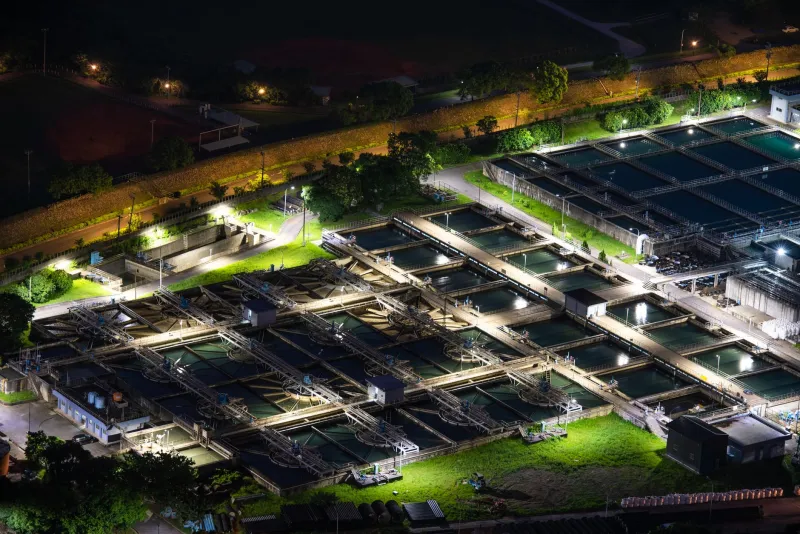
Wastewater systems are continuous processes. Sewage flows regardless of holidays, weather events, or the hour on the clock. Treatment plants operate around the clock, and the collection systems that feed them — hundreds or thousands of miles of pipe, pump stations, and lift stations — require constant monitoring and rapid response when something goes wrong.
For operators at smaller utilities especially, that responsibility falls on a rotating on-call schedule. A single operator may carry a pager or cell phone for an entire week at a time, responsible for responding to any alarm that triggers during off-hours. At larger facilities, overnight shifts are staffed with a skeleton crew, often one or two operators managing equipment that serves hundreds of thousands of residents.
"People picture wastewater as a day job with some paperwork," said one operator based in the Midwest who has worked the overnight rotation at a mid-sized municipal plant for nearly a decade. "The first time you get called out at 3 a.m. in February to pull a rag ball out of an impeller in a wet well, that picture changes pretty fast."
What On-Call Actually Involves
The nature of on-call work varies significantly depending on the size of the utility, the age of its infrastructure, and the geography it serves. In rural systems with aging collection networks, operators may respond to multiple callouts per week during wet seasons, when infiltration and inflow push systems to their limits. In newer suburban systems, alarms may be less frequent but no less urgent when they occur.
Common after-hours scenarios include:
- Pump station failures, ranging from mechanical issues to power outages requiring manual overrides or generator deployment
- High-water alarms at lift stations, particularly during heavy rainfall events
- Chemical feed system malfunctions at treatment facilities, which can affect effluent quality and regulatory compliance
- Blower or aeration system failures that threaten biological treatment processes
- Sewer overflows or backups requiring immediate containment and reporting to state environmental agencies
Each of these situations carries real consequences. A delayed response to a pump station failure can result in a sanitary sewer overflow, a regulatory violation, and potential environmental harm. The operator on call is not simply fixing equipment — they are protecting public health and preventing environmental damage, often while working alone in the dark.
The Physical and Mental Toll
Sleep disruption is the most immediate physical consequence of on-call and overnight work. Research on shift workers across industries consistently links irregular sleep schedules to elevated risks of cardiovascular issues, metabolic disorders, and immune suppression. Wastewater operators are not immune to these effects, and the nature of emergency callouts — which interrupt sleep rather than replace it — can be more disruptive than a fixed overnight shift.
"It's not the overnight shifts that wear you down as much as the unpredictability," noted an operator in the Southeast with more than fifteen years in the field. "When you're on call, you never fully relax. You're always half-listening for the phone. That kind of low-grade vigilance takes a toll over time."
Beyond physical fatigue, the psychological dimension of on-call work deserves serious consideration. Operators regularly make consequential decisions under pressure, in isolation, and with limited resources. The weight of that responsibility — knowing that a wrong call or a delayed response can affect a community — is something many operators carry quietly.
Mental health support and peer networks within the wastewater profession remain underdeveloped compared to other high-stress public service roles. Industry organizations are beginning to acknowledge this gap, but meaningful progress has been slow.
How Utilities Are Rethinking Shift Structures
Retention has become a pressing concern for water and wastewater utilities across the country, and on-call fatigue is increasingly recognized as a contributing factor to operator burnout and departure. Some utilities are responding with structural changes designed to reduce the burden on individual operators.
Strategies gaining traction include:
- Compressed work schedules, such as four ten-hour shifts, which reduce the number of on-call transitions and provide longer recovery windows
- Expanded on-call rotations that distribute after-hours responsibility across a larger pool of operators, reducing the frequency of individual callouts
- Remote monitoring technology that allows operators to triage alarms from home before determining whether a physical response is required, reducing unnecessary callouts
- Dedicated overnight staffing at larger facilities, replacing ad-hoc on-call arrangements with scheduled shifts that carry appropriate compensation
Some utilities in the Pacific Northwest and Mid-Atlantic regions have piloted wellness programs specifically designed for shift workers, incorporating flexible scheduling accommodations, mental health resources, and peer support networks. Early results suggest these efforts improve both retention and operational performance.
Evaluating Whether On-Call Life Fits Your Goals
For professionals considering a career in wastewater operations — or weighing a move to a new utility — the on-call question deserves direct, honest evaluation. There is no universal right answer. For some operators, the autonomy, the problem-solving intensity, and the sense of purpose that come with emergency response work are precisely what make the career compelling. For others, the lifestyle incompatibility with family obligations, health needs, or personal temperament is a legitimate reason to seek a different path within the industry.
Key questions worth asking during any job search or interview process:
- What is the on-call rotation frequency? One week in four is meaningfully different from one week in two.
- What is the average number of callouts per on-call period? Some utilities experience one or two per month; others see that many in a single week.
- What support is available during a callout? Is the operator expected to respond alone, or is backup available?
- How does the utility compensate on-call time? Standby pay, callout minimums, and overtime policies vary widely and affect total compensation significantly.
- What does the utility do to support operator wellbeing? The answer to this question reveals a great deal about organizational culture.
The wastewater profession needs operators who understand what they are signing up for — and who choose it with clear eyes. The work is demanding, the hours are unconventional, and the responsibility is real. It is also essential, stable, and for the right person, deeply rewarding.
The alarm will go off again at 2 a.m. The question worth asking now, before the phone rings, is whether you are the person who wants to answer it.