Federal Infrastructure Dollars and the Water Sector: Where the Money Is Flowing — and Where It Isn't
Federal Infrastructure Dollars and the Water Sector: Where the Money Is Flowing — and Where It Isn't
When President Biden signed the Infrastructure Investment and Jobs Act into law in November 2021, water sector advocates celebrated what looked like a generational opportunity. The legislation directed approximately $55 billion toward water infrastructure — the largest federal investment in clean water in the nation's history. Treatment plant overhauls, lead service line replacements, combined sewer overflow corrections, and PFAS remediation projects that had languished on utility capital improvement plans for decades suddenly had a plausible funding path.
Two years on, the picture is considerably more complicated. For environmental and wastewater professionals trying to read the labor market, the distribution of that money tells a story worth understanding in detail.
The Architecture of the Funding
Before examining outcomes, it helps to understand how the money was structured. The IIJA did not deliver funds directly to local utilities. Instead, the legislation channeled the majority of water-related appropriations through two long-standing mechanisms: the Clean Water State Revolving Fund and the Drinking Water State Revolving Fund. States receive capitalization grants from the EPA, which they then use to offer low-interest loans and, in some cases, principal forgiveness to utilities — effectively grants — for qualifying projects.
Additional funding streams were created specifically under the IIJA, including dedicated allocations for lead service line replacement and emerging contaminants such as PFAS. These newer programs introduced separate application requirements, different eligibility criteria, and, in many states, entirely new administrative processes that agencies had to build largely from scratch.
The result: states that already had robust revolving fund infrastructure and experienced program staff were positioned to move quickly. Those with leaner environmental agencies faced a steeper climb.
States That Have Moved the Needle
Several states have distinguished themselves in the pace and scale of their IIJA water funding deployment.
Texas, which operates one of the country's larger revolving fund programs, reported committing hundreds of millions in IIJA-supplemented loans within the first eighteen months, with projects spanning rural water system upgrades and urban wastewater treatment expansions. The Texas Water Development Board's existing administrative capacity allowed it to absorb the new funding streams with relative efficiency.
Virginia similarly accelerated its clean water revolving fund activity, directing significant IIJA dollars toward nutrient reduction projects tied to Chesapeake Bay restoration requirements — a regulatory driver that had already built a pipeline of shovel-ready projects waiting on financing.
In the Midwest, Ohio and Michigan both reported early progress on lead service line replacement programs, a politically visible priority that state administrators had incentive to demonstrate quickly. Michigan, still navigating the long shadow of the Flint water crisis, had existing infrastructure for community engagement and project documentation that proved adaptable to the new federal requirements.
Where Delays Have Accumulated
Not every state has moved at the same pace, and utility managers in certain regions have expressed frustration with the gap between legislative promise and operational reality.
Smaller states with limited EPA program staff have reported multi-month delays in processing applications, particularly for the emerging contaminants funding, which requires detailed technical documentation that many rural utilities lack the in-house capacity to produce. Some districts have described hiring outside consultants simply to navigate the application process — an added cost that partially offsets the benefit of the funding itself.
Administrators in several southeastern states noted that the principal forgiveness provisions, which direct a share of funding toward disadvantaged communities, introduced additional eligibility determinations that slowed the overall approval timeline. The criteria for what constitutes a "disadvantaged community" vary by state, creating inconsistency that applicants find difficult to anticipate.
A water resources director at a mid-sized utility in the Gulf Coast region described the experience this way: the funding is real, the intent is genuine, but the pathway from eligibility to executed loan agreement involves a sequence of steps that took considerably longer than the utility's board had been led to expect based on early federal communications.
What Funded Projects Actually Look Like
For professionals trying to connect federal policy to job-site reality, the concrete examples are instructive.
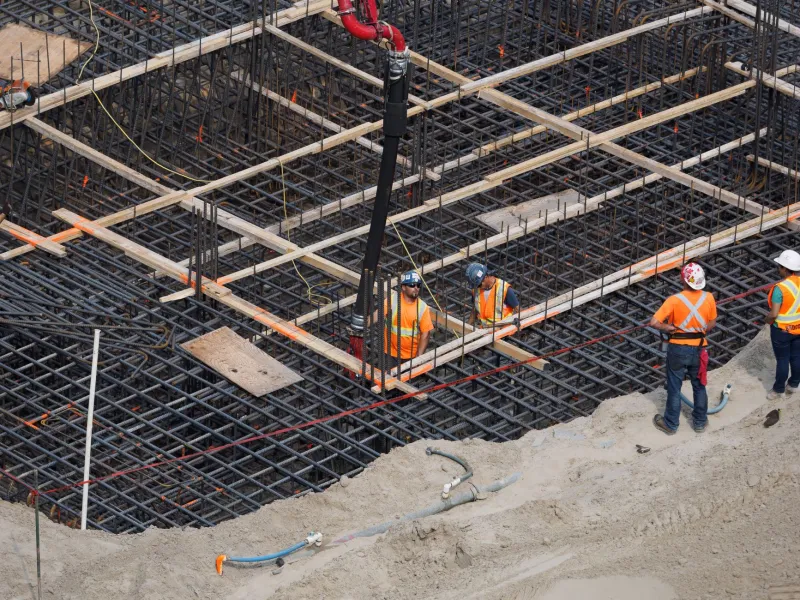
In New Mexico, IIJA-funded projects have supported wastewater system construction in colonias — unincorporated communities along the U.S.-Mexico border that historically lacked basic sanitation infrastructure. These projects have created sustained demand for licensed operators, construction inspectors, and project managers in a region where wastewater employment had been limited.
In the Pacific Northwest, utilities have used IIJA financing to accelerate biosolids management upgrades, a category of work that requires specialized operators and is generating hiring across multiple facility types.
In the Northeast, several large combined sewer overflow long-term control plans — court-ordered infrastructure programs that had been proceeding on extended timelines — received IIJA supplemental financing that allowed project acceleration. Accelerating a decade-long capital program by even two or three years translates directly into compressed hiring timelines for engineers, construction managers, and eventually the operators needed to run new or expanded facilities.
What This Means for Your Career
For wastewater professionals, the IIJA funding landscape functions as a forward-looking map of where hiring demand is likely to concentrate over the next several years.
Utilities that have successfully captured significant IIJA allocations are, by definition, utilities with active or imminent capital programs. Capital programs require project management staff, engineering support, construction oversight, and ultimately expanded operations teams to run whatever gets built. A utility that just closed a $40 million revolving fund loan for a treatment plant expansion is a utility that will be posting positions.
Conversely, utilities still waiting on funding approvals may face hiring freezes or delayed project timelines. Understanding which districts in your region have received commitments — information that is publicly available through state revolving fund program reports and EPA IIJA tracking dashboards — can sharpen your job search strategy considerably.
For professionals with grant writing, project management, or regulatory compliance backgrounds, the funding environment has also created a secondary demand: utilities need staff who can navigate the application and compliance reporting requirements that accompany federal financing. This is a skill set that translates across employers and represents a durable career asset as long as federal infrastructure investment remains active.
Reading the Policy as a Professional
Federal infrastructure legislation is easy to dismiss as abstract — the province of lobbyists and congressional staff rather than operators and engineers working daily shifts. The IIJA's implementation record argues against that dismissal.
Where the money has moved, it has produced tangible changes in utility budgets, capital plans, and staffing needs. Where it has stalled, the delay has real consequences for communities and for the professionals who might otherwise have found stable employment at a well-funded utility.
Tracking the flow of these dollars is not merely a policy exercise. For anyone building a career in wastewater, it is a form of market intelligence — one that the most strategically minded professionals in this field are already using to inform where they apply, where they relocate, and where they invest in additional credentials.
The money is real. The projects are real. The jobs that follow from them are real. The question is whether you know which districts have already gotten their share.